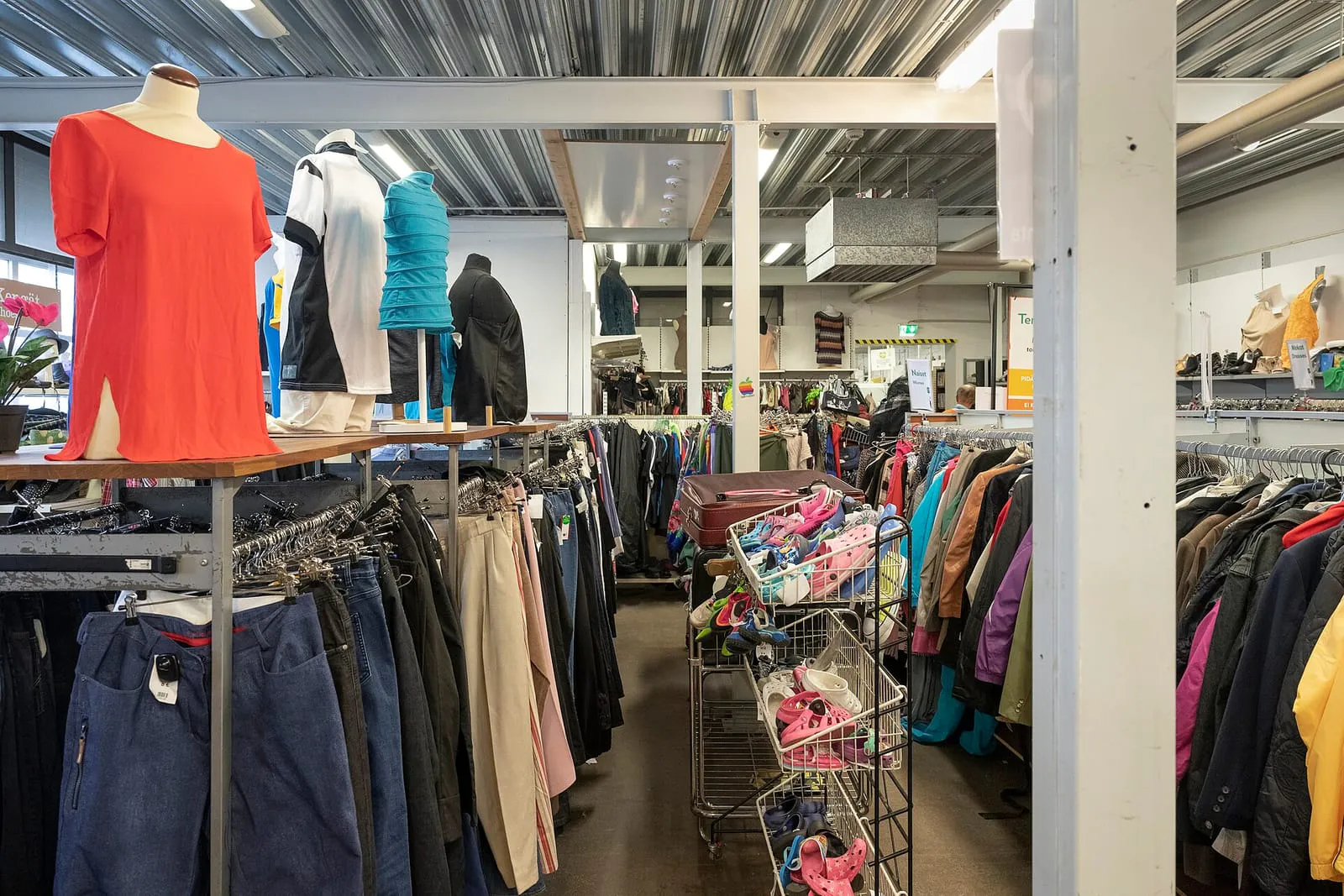
A thrift store is not a shop with a stock list. It is an unsorted warehouse that happens to be open to the public, and the difference matters: there is no size run to ask for, no second colour in the back, and no way to know what arrived this morning. What you get instead is volume and low prices, which is only an advantage if you have a method.
Shop for a gap, not for a mood
The single biggest cause of a wasted afternoon is walking in without knowing what you need. Money spent on something you did not need is not a bargain, regardless of the price tag.
Before you go, spend two minutes making a short list. Two or three items at most, described in a way you can recognise on a rack:
- A dark wool coat, mid-length, no polyester-heavy blend.
- A replacement for the cotton shirt that finally wore through at the collar.
- A jacket for a wedding in a month, in a colour that works with what you already own.
A list gives you permission to walk past everything else, which is what makes the trip quick. The pleasure of thrifting is finding something unexpected, and you can still do that in the last ten minutes, once the list is handled.
Wear the right clothes
Dress for trying things on. Thin layers, and shoes you can slip off, because many thrift shops have no fitting room at all and those that do have one tend to have poor light and a queue. A tape measure in your pocket is more useful than a mirror. If you know your measurements across the chest, waist, shoulder and inseam, you can rule out most of the rack without undressing.
Two passes, not one
Most people shop a thrift store in a single pass, picking things up, examining them, and putting them back. That is slow, and it makes you tired before you have covered the store.
A faster method is two passes.
The first pass is by eye and by hand. Walk the rack and let your hand slide along the shoulders of the garments, looking for the fibre you want, the colour you want, and the weight of cloth you want. Do not stop. If something feels like the material you are looking for, pull it out and put it over your arm.
The second pass is the examination. Take the armful to a corner and go through it properly: labels, seams, underarms, damage, missing parts. This is where you reject most of what you picked up, and that is the point.
The two-pass method works because the expensive part of thrifting is not finding garments, it is inspecting them. Do that step once, with everything in front of you, instead of fifty times while standing in the aisle.
Where the value usually is
Stock varies by store and by town, but a few sections repay attention more consistently than others:
- Outerwear. Coats and jackets are the category where older, better-made garments survive longest and where the price difference between new and secondhand is largest.
- Knitwear. Wool, cashmere and alpaca turn up regularly, usually next to acrylic jumpers that look similar and will pill within a month.
- Tailoring. Suiting and blazers are heavily donated and often well made. Alterations cost money, but a good jacket with a correct shoulder is worth adjusting.
- Accessories. Belts, scarves and bags are cheap, small and hold their value, which makes them the easiest category to buy well.
- Denim. Heavy, dark, un-stretched denim in a cut that suits you is worth taking, especially if the seams are intact.
Skip the rows of new-looking fast fashion, unless you are shopping for something specific. It is the one category where the thrift price is not much better than buying new on sale, and the construction is the reason it was donated.
Prices are not a signal of quality
A common mistake is to treat a higher price tag as evidence of a better garment. In a charity shop, pricing is often done quickly by category or by eye, and the same rack can hold a hand-finished wool coat and a tired polyester one at similar prices. Judge the garment, not the tag.
The reverse also holds. A garment being extremely cheap does not make it worth owning. Bargain creep — buying because something is cheap rather than because you want it — is how a wardrobe fills up with clothes you never wear.
The three-minute inspection
Before anything goes in the basket, check it in good light:
- Turn it inside out. Look at the seams along the shoulder and under the arm, and at the crotch of trousers, which is where fabric fatigue shows first.
- Hold it up to a window. Thinning cloth, small holes and faded patches are far easier to see in daylight than under a shop’s fluorescent tubes.
- Work every fastening. Zip it up, button it, check the elastic. A replacement zip is a job; a perished waistband elastic is a job you will postpone for a year.
- Smell it. Smoke, mildew and heavy perfume are the ones to watch. Smoke can be aired out, mildew usually cannot.
- Ask what it will cost to make wearable. A missing button is minutes. A re-line is not.
If the answer to “would I wear this as it is, this week?” is no, the garment is a project, and projects have a way of living in a bag under the bed. Buy the ones you will wear, and leave the rest for the next person.
Go on restock days, and go early
New stock usually goes out on weekdays, often in the morning, and the best of it moves within a day or two. Ask the staff when the racks are refilled in your local shop. If there is a sale, it is usually clearing what has already been picked over, and the discounts are less valuable than fresh stock at full price.
Finally, accept that most trips produce nothing. If you go in with a list, check the sections that matter for what is on it, look at everything new in those sections and then leave, an empty-handed trip costs you twenty minutes instead of an afternoon. That is a bargain in itself.