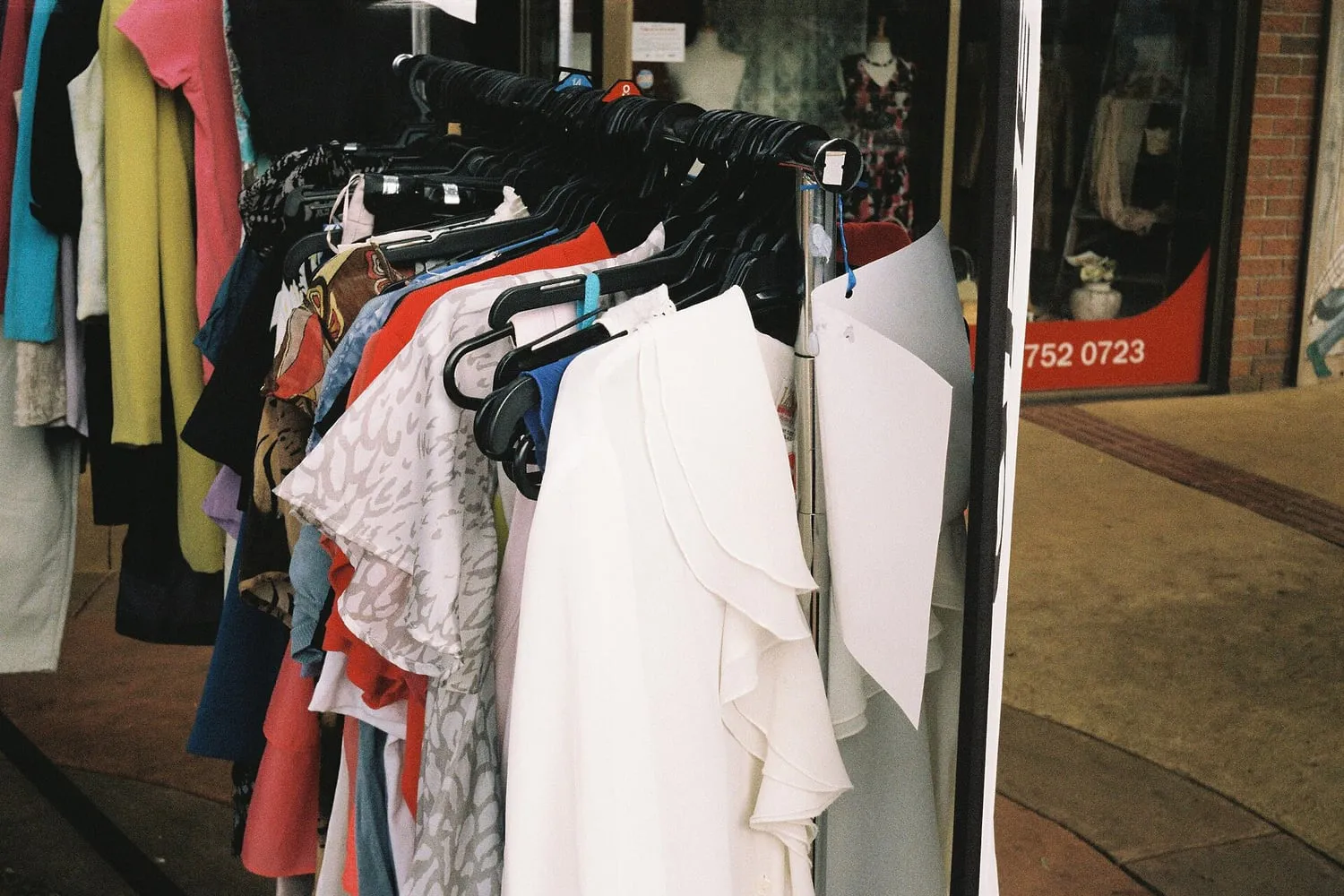
When people start reselling secondhand clothing, they tend to assume that old means valuable. The market disagrees. What sells is what somebody needs at the moment they are looking, and need is created by size, style, season and the place you are selling in far more than by the decade a garment was made.
Understanding that changes what you pick up, how you describe it, and how you price it. It also changes what you refuse, which is the part that protects your time.
Where demand actually comes from
Four things move an item, and they can pull in different directions.
- Size scarcity. Demand concentrates at the ends of the size range. Extremes, both small and large, are produced in smaller quantities and are harder to find secondhand, so the people who need them search harder and pay more. A very ordinary garment in an unusual size can be worth more than a distinctive garment in a common one.
- Style demand. Certain silhouettes and fabrics are wanted at any given time regardless of age, and the same item can be in or out of favour within a year. This is fashion’s ordinary behaviour rather than a fixed property of the garment.
- Season and timing. Coats sell when people are shopping for coats, and the buyer’s window opens before the weather does. Listing knitwear in high summer and expecting a quick sale ignores when people actually shop.
- Venue. The same item reaches different buyers on a platform, at a market stall and in a shop. A general platform reaches the widest audience but competes on price; a niche venue reaches people already looking for that specific thing, and they will judge it on the details they care about.
Notice that three of these four are properties of the buyer rather than the garment. The item does not decide whether it sells; the person searching for it does. That is why two similar garments listed on the same day can end very differently, and why a piece you consider ordinary can be exactly what someone has been looking for. When you source, ask who is likely to want this and how they would find it, rather than how old or how unusual it is. An item that answers a specific search is far easier to sell than one that merely happens to exist.
The listing is where most sales are lost
An honest listing sells faster than a flattering one, because it removes the reason for a return and the reason for a question. Buyers who feel misled either walk away or buy and complain, and both cost you more than the sale is worth.
For photographs, use daylight, a plain background, and enough distance that the whole garment is visible. Show the label, show the fibre content, show the measurements against a tape, and show the flaws directly. A photograph that hides damage is not a better listing; it is a delayed problem.
For the description, state the fibre, the measurements, the condition and any repair. Say plainly what the garment is and what it is not. If it has been washed and the colour has faded, write that. If a seam has been repaired, write that too. If you do not know the era, say you are unsure rather than guessing a decade, because a confident mistake destroys trust when it is discovered.
Pricing and the room to negotiate
Price from what comparable items actually sell for, not from what people are asking. Asking prices include the listings that never move, and treating them as the market will leave you overpriced and holding stock.
Start a little above your floor so there is room to accept a reasonable offer, and decide your floor before you list rather than during a conversation. When a buyer makes an offer, the question is not whether you could get more from someone else, but whether you would rather have the money now or hold the item for another month. Both answers are legitimate; drifting between them is what makes selling feel exhausting.
Bundling helps more than discounting. Two related items at a modest combined price often move faster than the same two items discounted separately, because the buyer’s decision becomes simpler and the shipping cost is spread.
Things not to touch
Some inventory carries risk or effort that the sale price will not cover.
- Counterfeits and anything you cannot authenticate. Passing on a fake, even unknowingly, exposes you to complaints and takedowns.
- Items that have been washed into a new shape. Shrunken wool, felted knitwear and garments whose colour has bled are hard to sell honestly and hard to photograph attractively.
- Suits and sets missing a piece. A jacket without its trousers is not half a suit; it is a jacket, and it will be judged as one.
- Heavily damaged pieces, unless you are deliberately selling to someone who repairs. Price them as repair work and describe them that way.
- Anything needing specialist cleaning. If the clean costs more than the garment will fetch, you have bought a bill rather than stock.
- Items with an odour you cannot remove. Smoke, mould and pet smells are not fixable by airing alone, and buyers return them.
The time cost nobody counts
The price you pay for an item is only part of what it costs you. Add the time spent sourcing, cleaning, photographing, writing the listing, answering questions, packing and taking it to the post, and then add the occasional return. For a single low-value item, that total can exceed what the item sells for.
The fix is batching rather than choosing. Photograph a group at once, write listings from a template, keep packing materials stocked, and set aside one block of time for despatch. Selling becomes efficient when it is a routine rather than a series of errands.
Measure your effective rate honestly. If a batch of ten items takes a full day and a great deal of attention, and returns a modest amount, that is fine as a hobby and a poor trade as work. Knowing which one it is for you prevents a lot of resentment.
There is also a storage cost that is easy to overlook. Stock sitting in bags and boxes has to be kept clean, dry and out of the light, and every item you hold is an item you have already paid for and not yet recovered. Treat unsold stock as money that is parked rather than money that is earned, and the case for moving it on becomes clearer.
When stock stops moving
Not everything sells, and the discipline is to notice sooner than you would like. Review anything that has sat unsold for a full season. Relist it once with better photographs and a clearer description. If it still does not move, either drop the price to your floor or remove it from sale.
Dead stock occupies the space and the mental attention that the next good item needs. Moving it on, even at a loss, is usually cheaper than keeping it, and the honest calculation is what the space and the attention are worth to you. The sellers who last are not the ones with the best eye; they are the ones who rotate their inventory and let go without sentiment.